The single most important food safety topic for Antep pistachios is aflatoxin control. Aflatoxins are natural toxins produced by certain moulds under favourable moisture and temperature, and they are strictly regulated in tree nuts such as pistachios. Managing this risk requires a system that controls every step from harvest to dispatch – and an ISO 22000 food safety management system provides exactly that framework.
What is aflatoxin and why does it matter?
Aflatoxins are compounds produced mainly by the moulds Aspergillus flavus and Aspergillus parasiticus. Because they pose a health risk, Türkiye, the European Union and many other markets set maximum levels for total aflatoxins and aflatoxin B1 in nuts. Lots exceeding these limits can be rejected at import, which means serious cost and reputational damage for both exporter and buyer.
One key point: once aflatoxin has formed, processes such as roasting cannot fully eliminate it. The real solution is to prevent it from forming in the first place.
Factors that increase aflatoxin risk
Mould growth and toxin formation in pistachios typically increase under the following conditions:
- Early splitting: Nuts whose outer hull splits while still on the tree become exposed to mould spores.
- Insect and mechanical damage: A damaged shell makes it easier for mould to enter.
- Delayed hulling: If the green hull is left on harvested nuts for too long, heat and moisture build up.
- Insufficient drying: High moisture creates ideal conditions for mould growth.
- Poor storage: Humid, warm and poorly ventilated warehouses raise the risk throughout storage.
Critical control points from harvest to dispatch
Effective aflatoxin management is not a single test but a set of measures applied along the entire chain:
- Timely harvest and fast processing: Removing the green hull soon after harvest.
- Proper drying: Bringing moisture quickly down to a safe level and keeping nuts off the soil.
- Sorting: Removing stained, insect-damaged, shrivelled and discoloured nuts by hand and with optical sorters. A large share of high-risk nuts is removed at this stage.
- Sampling and laboratory analysis: Because aflatoxin is unevenly distributed within a lot, representative sampling is critical; analyses are carried out in accredited laboratories.
- Controlled storage: Cool, dry, ventilated and pest-protected warehouses, together with suitable packaging.
Why green kernels need extra care
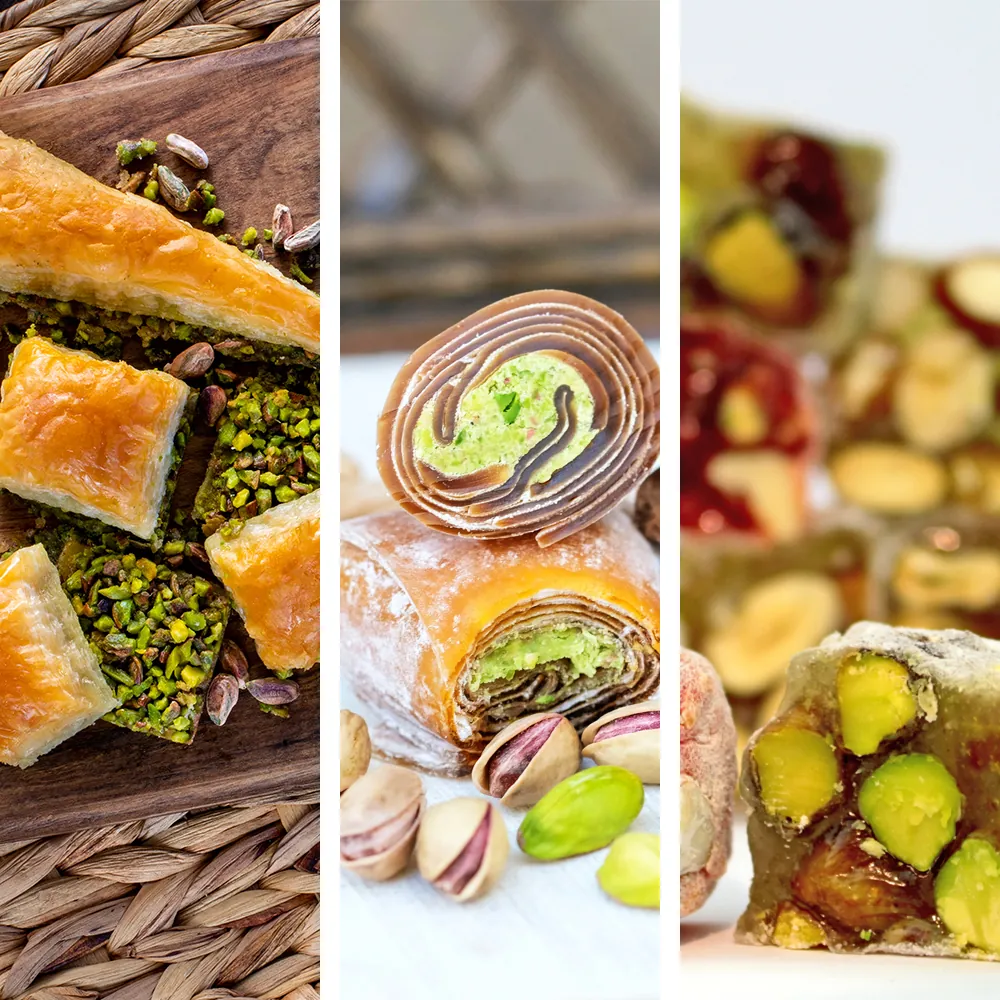
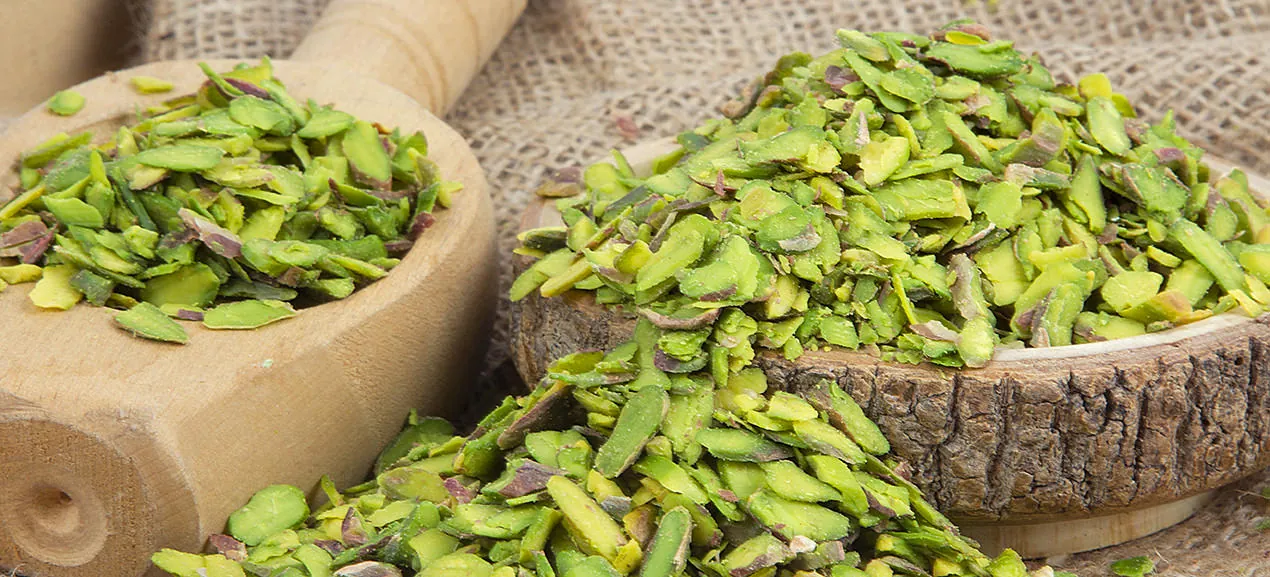
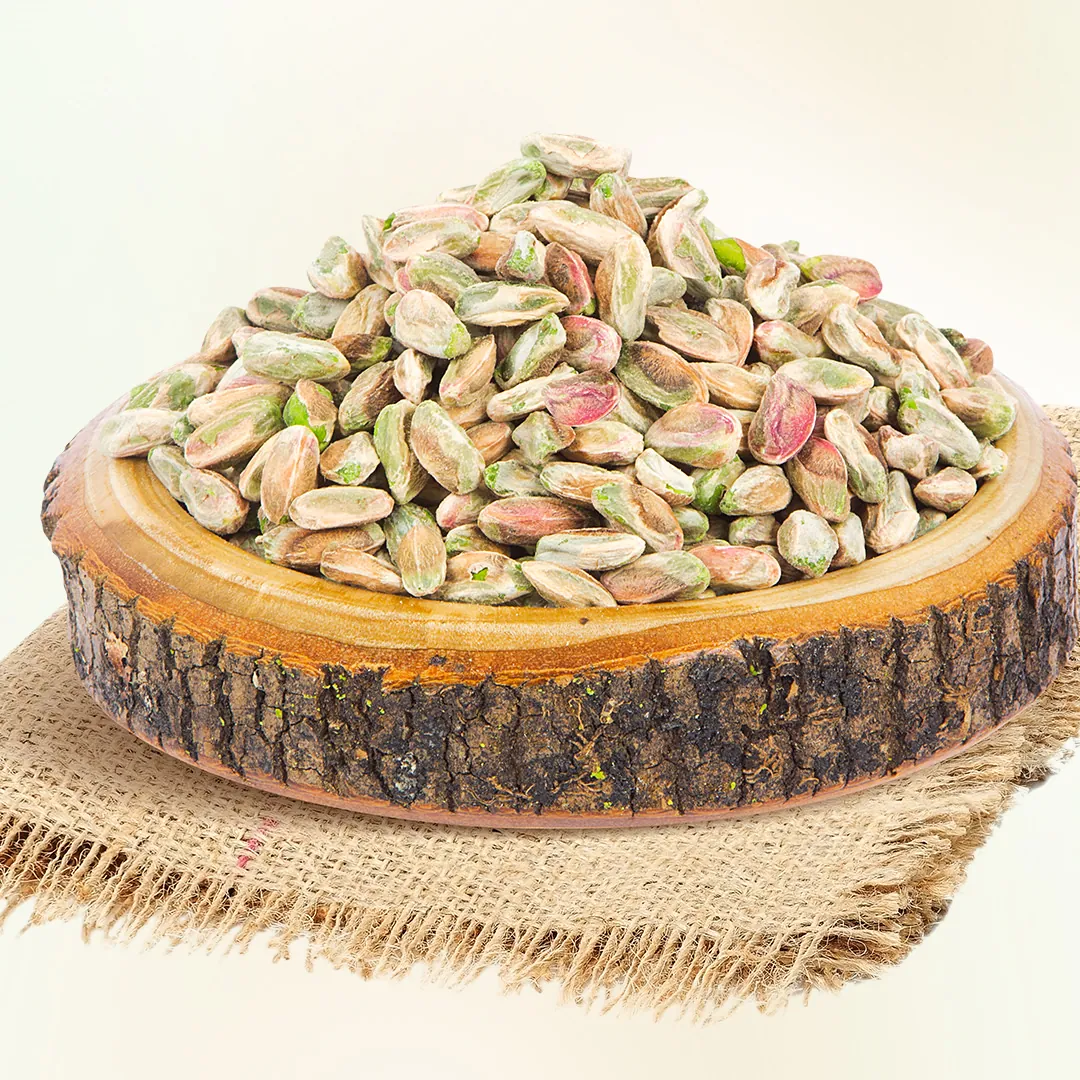
Early-harvest green (boz) kernels are picked before full maturity, so their moisture content is higher and they are sensitive to any delay after harvest. The green hull must be removed quickly, and cracking and drying must follow without waiting. Because green kernels go into ready-to-eat products such as baklava and gelato, colour, staining and kernel integrity checks during sorting are also kept strict. Storing the dried product in a cool, dry place – ideally vacuum-packed – helps protect both colour and safety.
What does ISO 22000 mean for a wholesale buyer?
ISO 22000 is an internationally recognised food safety management standard for every organisation in the food chain. It combines HACCP principles, prerequisite programmes (hygiene, pest control, maintenance, training and more) and a management system approach. For buyers, this means:
- Systematic hazard analysis and monitoring of critical points
- Traceability from raw material to dispatch, so a lot can be traced back if an issue arises
- Documented, auditable and continuously improved processes
An ISO 9001 quality management system, in turn, supports consistency from order to delivery. Applying both standards together gives confidence to exporters and to companies that run supplier audits. Even so, asking for an analysis report with every shipment remains good practice.
Sourcing from Niyaz Food
Niyaz Food processes Antep pistachios in ISO 22000:2018 and ISO 9001:2015 certified facilities. You can review our certificates on the quality certificates page, explore our green pistachio kernels, and contact us for analysis documents and wholesale quotes.