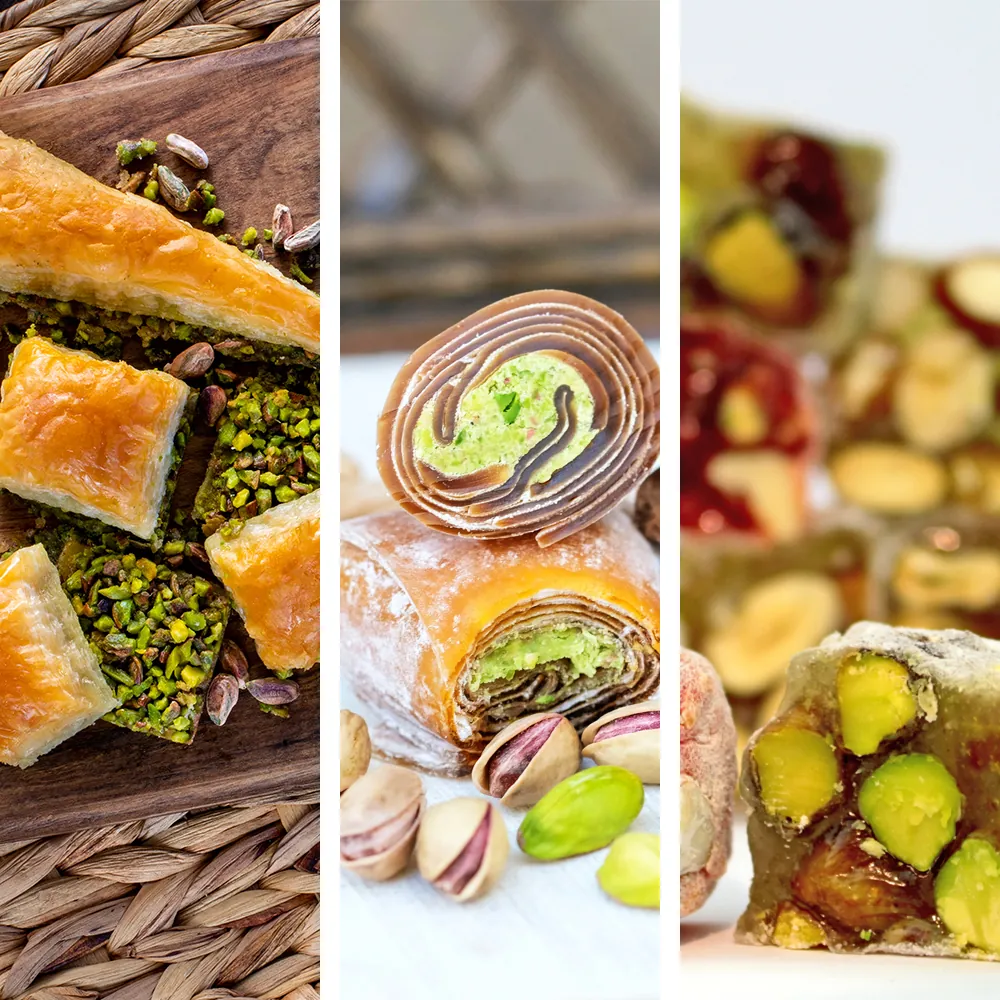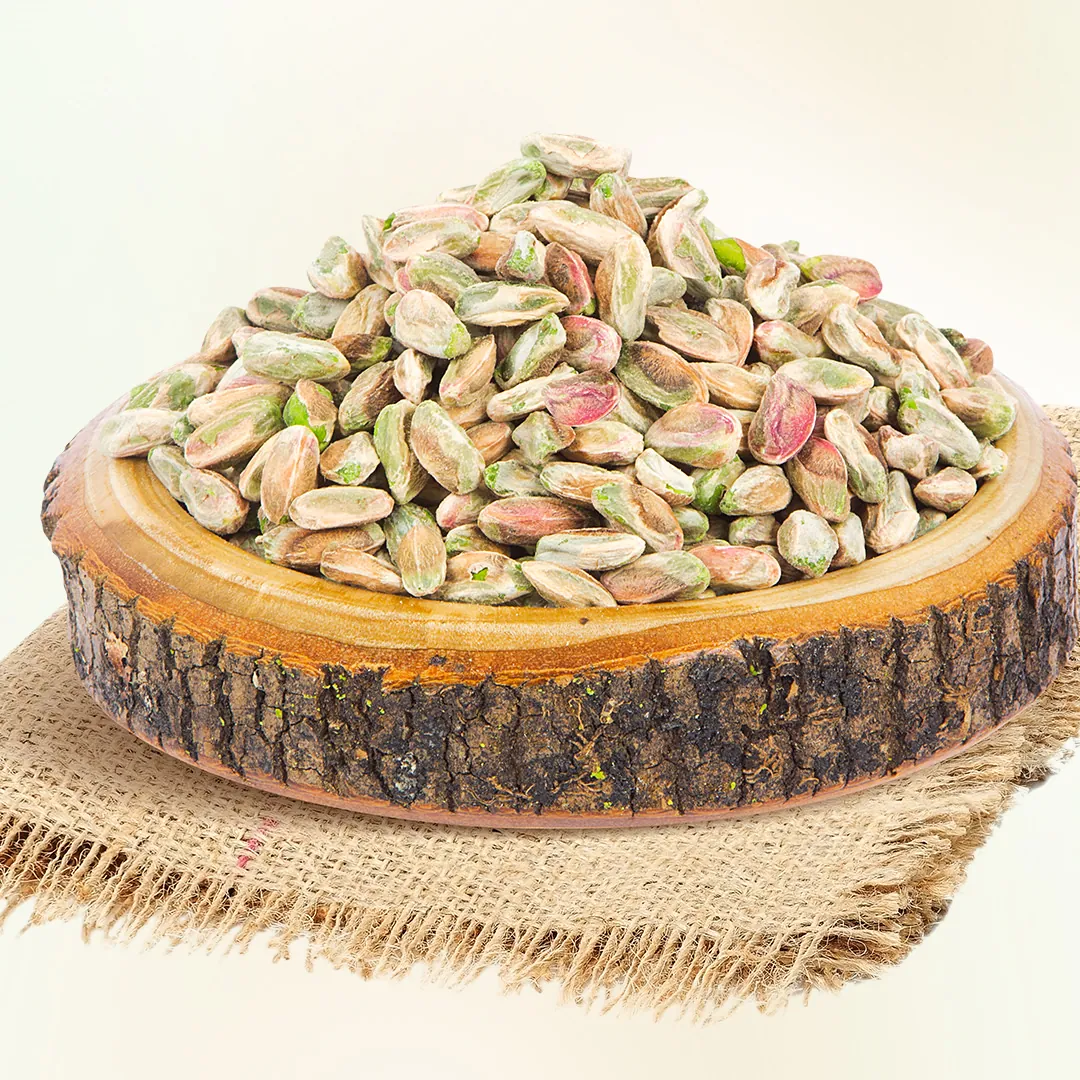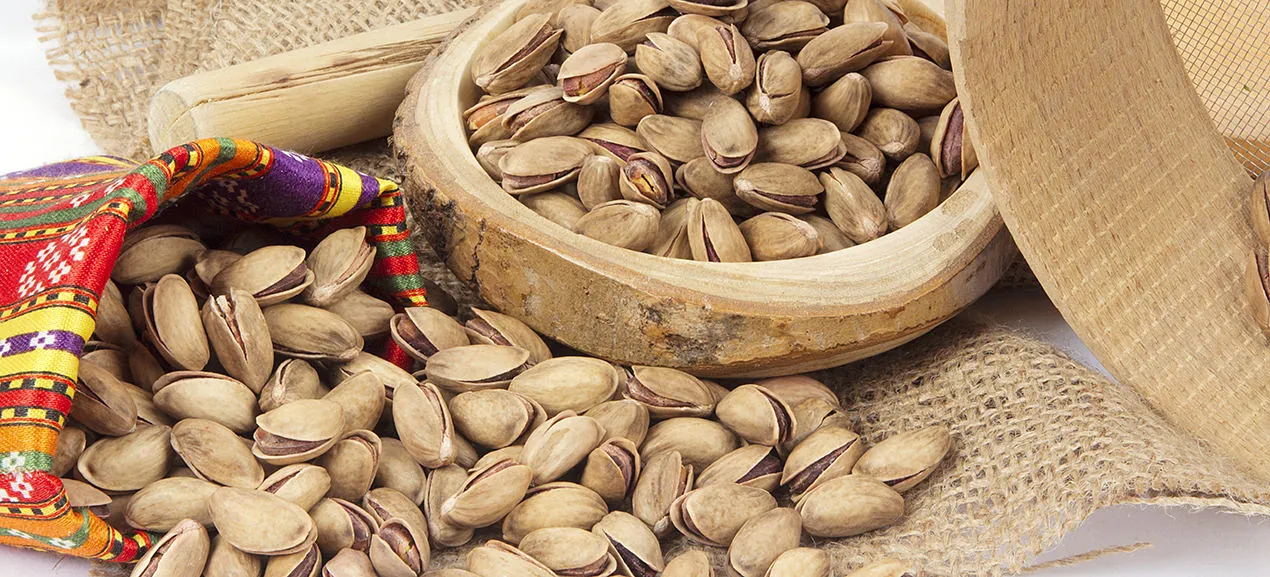
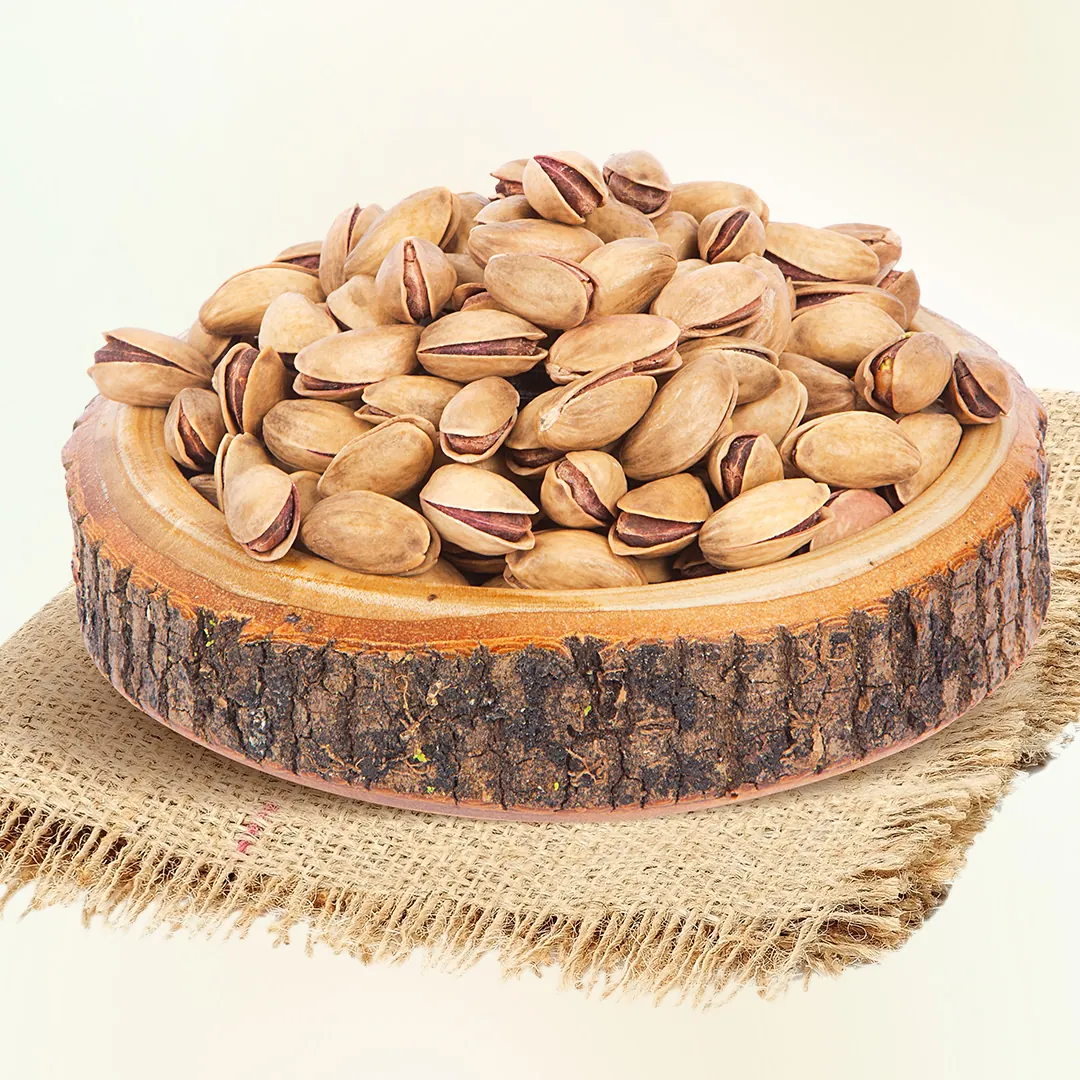
Roasted Antep pistachios are made by sorting naturally split in-shell pistachios, seasoning them with a salt solution, roasting them at a controlled temperature, then cooling and packing them. In short, a good roasted pistachio is the result of the right raw material, balanced salt, even roasting and hygienic packing. In this article we explain, step by step, how this process – practised in Gaziantep for generations – works in a modern facility.
1. Raw material selection: it all starts with the right nut
Pistachios suitable for roasting are fully mature, clean-shelled and naturally split. After harvest, the soft outer hull is removed and the in-shell nuts are dried. Before entering the roasting line they go through several preparation steps:
- Split separation: Open-mouthed nuts are separated from closed (non-split) ones. Snack consumers expect a pistachio that opens easily.
- Size grading: Nuts of similar size roast evenly, so grading comes before roasting.
- Defect and foreign-matter removal: Blank, stained, insect-damaged or broken-shell nuts, as well as stones and stems, are removed.
Because this stage affects both the appearance and the food safety of the final product, it is one of the most critical steps in the process.
2. Salting: getting the salt inside the shell
With in-shell pistachios, the goal is for the salt to reach the kernel rather than sit only on the outer shell. To achieve this, the nuts are usually soaked in brine or sprayed with a salt solution and allowed to rest. The brine enters through the open split, and as it evaporates during roasting it leaves salt on both the shell and the kernel.
The salt level is adjusted to suit the target market: some buyers prefer lightly salted nuts, while other markets ask for a more pronounced salt or a lemon-salt finish. What matters most is keeping the same salt level in every lot. For unsalted roasted pistachios, this step is simply skipped.
3. Roasting: balancing temperature and time
The salted pistachios are roasted in rotary drum or continuous conveyor roasters at a controlled temperature. Roasting lowers the moisture content, gives the kernel a crunchy texture and brings out the characteristic aroma of the Antep pistachio.
Balance is everything here. Under-roasted nuts stay soft and have a shorter shelf life, while over-roasting creates a bitter taste and a darkened kernel. That is why temperature and time are set according to the moisture content, nut size and characteristics of each lot. Experienced roasters combine visual and taste checks with measuring instruments.
4. Cooling, quality control and packing
Pistachios leaving the roaster are cooled quickly. Packing warm nuts can cause condensation inside the package and lead to quality loss, so cooling is a step that should never be skipped. Final checks then follow:
- Visual check of colour and roast level
- Salt level and taste check
- Moisture measurement to confirm suitability for the intended shelf life
- Final sorting to remove scorched, closed or defective nuts
Approved product is packed according to the buyer’s needs in 10 kg carton boxes, 20 kg vacuum-packed carton boxes or 25 kg PP woven sacks. Vacuum packing reduces contact with oxygen and helps preserve freshness for longer.
Why food safety matters as much as roasting
Roasted pistachios are a ready-to-eat product, so every step from raw material intake to dispatch must be documented and carried out under hygienic conditions. An ISO 22000 food safety management system provides this discipline through hazard analysis, critical control points and traceability. For wholesale buyers, that means a consistent and reliable product from one lot to the next.
Sourcing from Niyaz Food
Niyaz Food, a Gaziantep pistachio supplier with four generations of expertise, prepares its roasted pistachios in ISO 22000:2018 and ISO 9001:2015 certified facilities. See our roasted pistachios page for product details, review our quality certificates, or send your quantity and packaging requirements through our contact page for a tailored quote.