Between the orchard and the shipment, Antep pistachios go through harvesting, hulling, drying, sorting, cracking, size grading and packing. Every step affects colour, flavour and food safety. In this article we follow an Antep pistachio from the tree in Gaziantep to the wholesale buyer, one stage at a time.
1. Harvest: timing is everything
With Antep pistachios, harvest timing determines the product you end up with. There are three main harvest periods in Gaziantep:
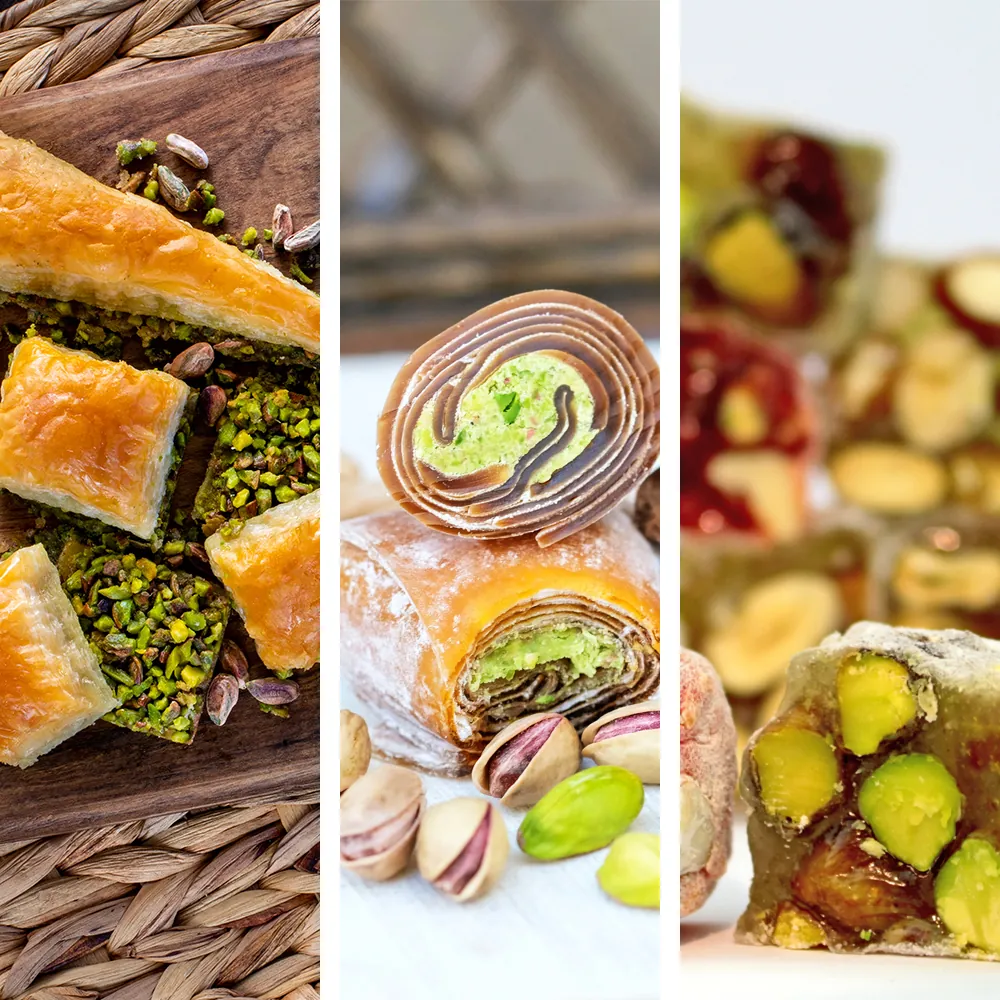
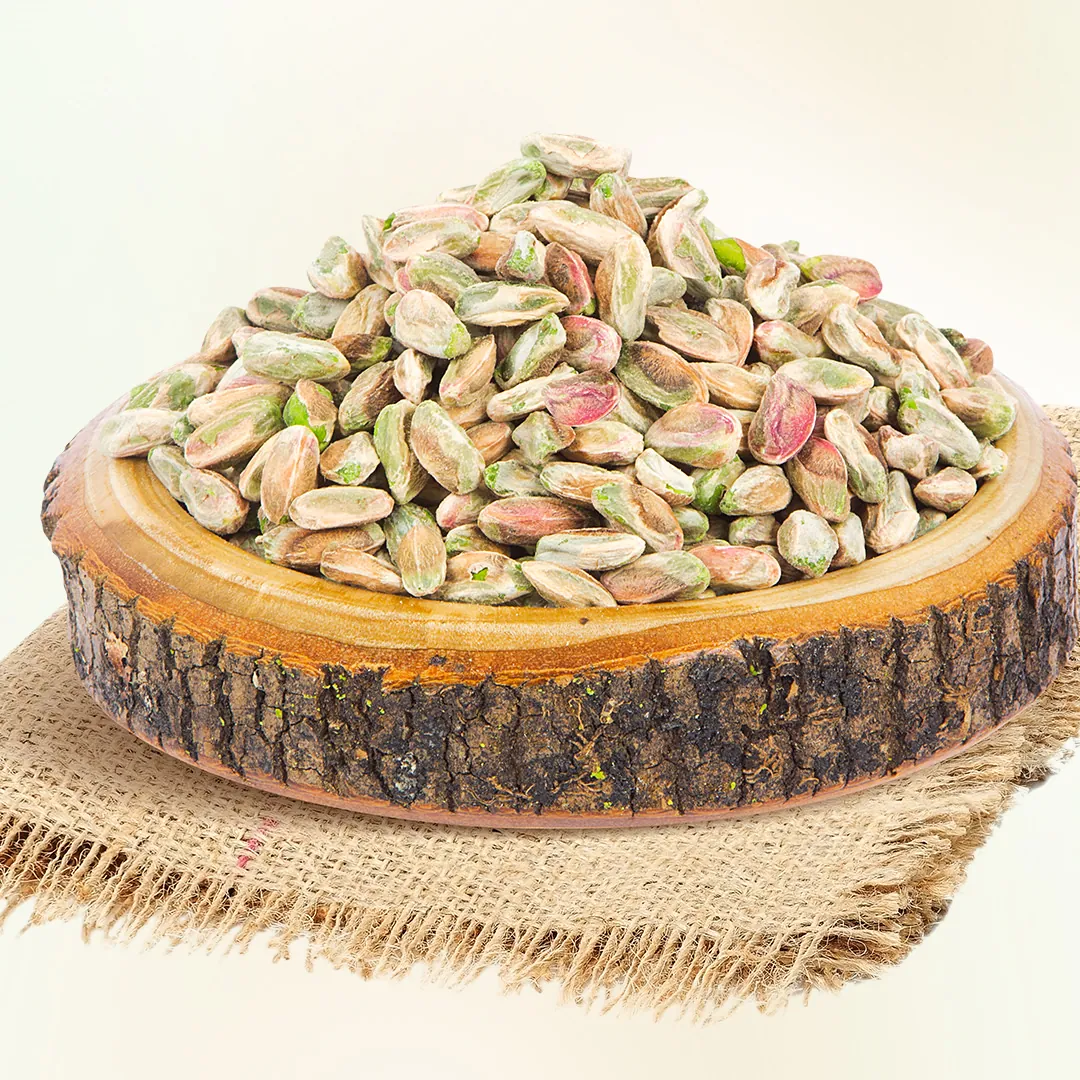
- Boz (green) harvest – late July to early August: Pistachios that are not yet fully mature, giving vivid green kernels. Essential for baklava and ice cream.
- Meverdi harvest – usually mid-August: Between green and red, with a colour ranging from light green to yellowish and a plump kernel.
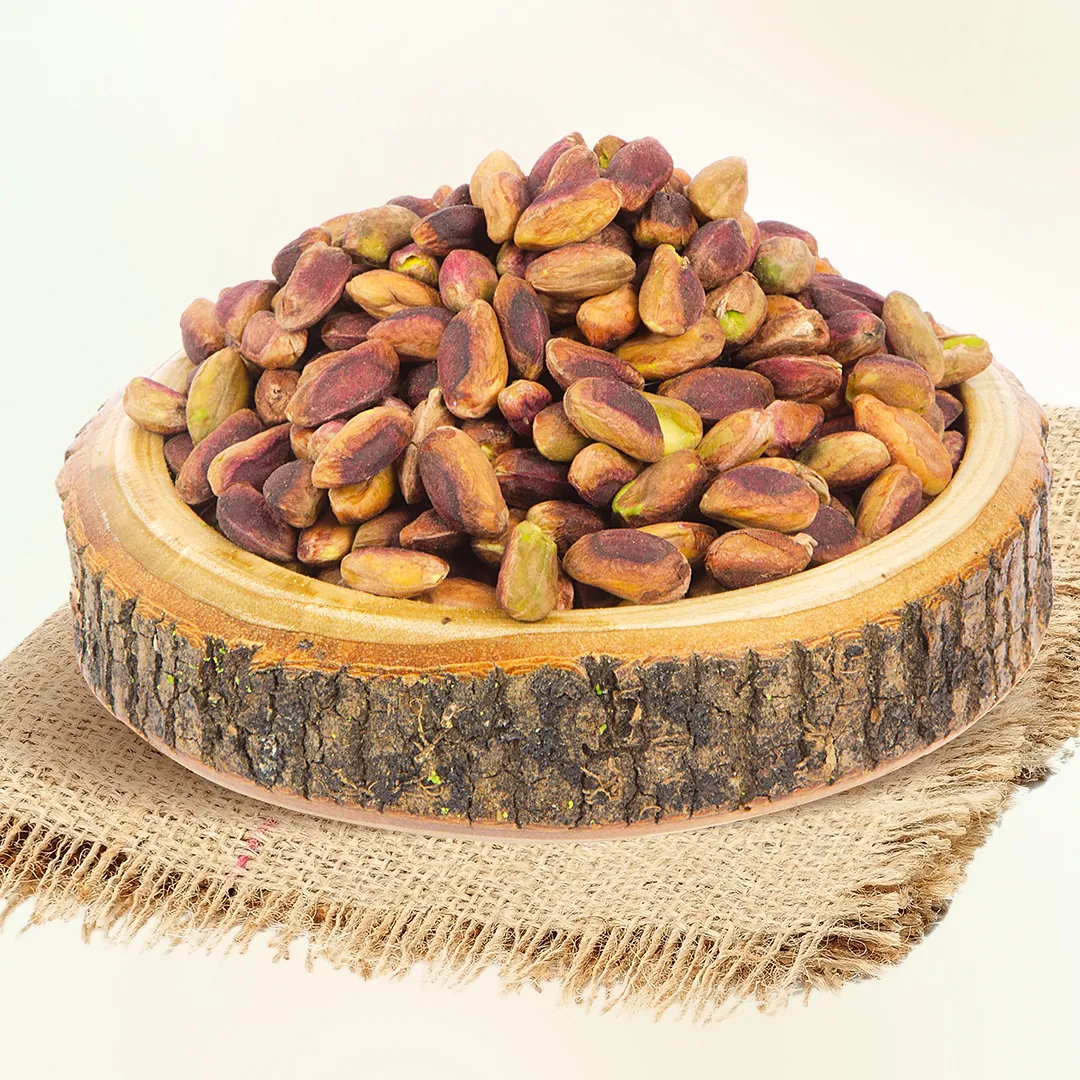
- Red harvest – September: Fully mature pistachios whose outer hull has turned reddish. Roasted in-shell pistachios and red kernels come from this harvest.
Pistachios are usually picked by hand or by shaking the branches so the nuts fall onto sheets spread under the tree, which keeps them from touching the soil.
Choosing the moment to harvest takes experience. Growers look at hull colour, kernel fill and kernel colour together. Earlier picking gives greener but lower-yielding nuts, while later picking gives plumper nuts that lose their green colour. And because pistachio trees show alternate bearing – a heavy crop one year and a lighter one the next – harvest planning is revisited every season.
2. Hulling and drying
A freshly harvested pistachio is covered by a soft, green-to-reddish outer hull. This hull is removed by machine as soon as possible after picking. If the nuts wait too long, the hull heats up, the hard shell becomes stained and the risk of mould increases.
The hulled pistachios are washed and dried. Traditionally spread out in the sun on clean surfaces, drying today is also supported by controlled drying machines. The goal is to bring moisture down to a safe level quickly and make the nuts ready for storage.
Fast, careful hulling and drying keep the hard shell clean and light-coloured – the first quality signal a consumer sees in roasted in-shell pistachios. For kernels, this stage is decisive in protecting colour and aroma and in reducing aflatoxin risk.
3. Sorting and cracking
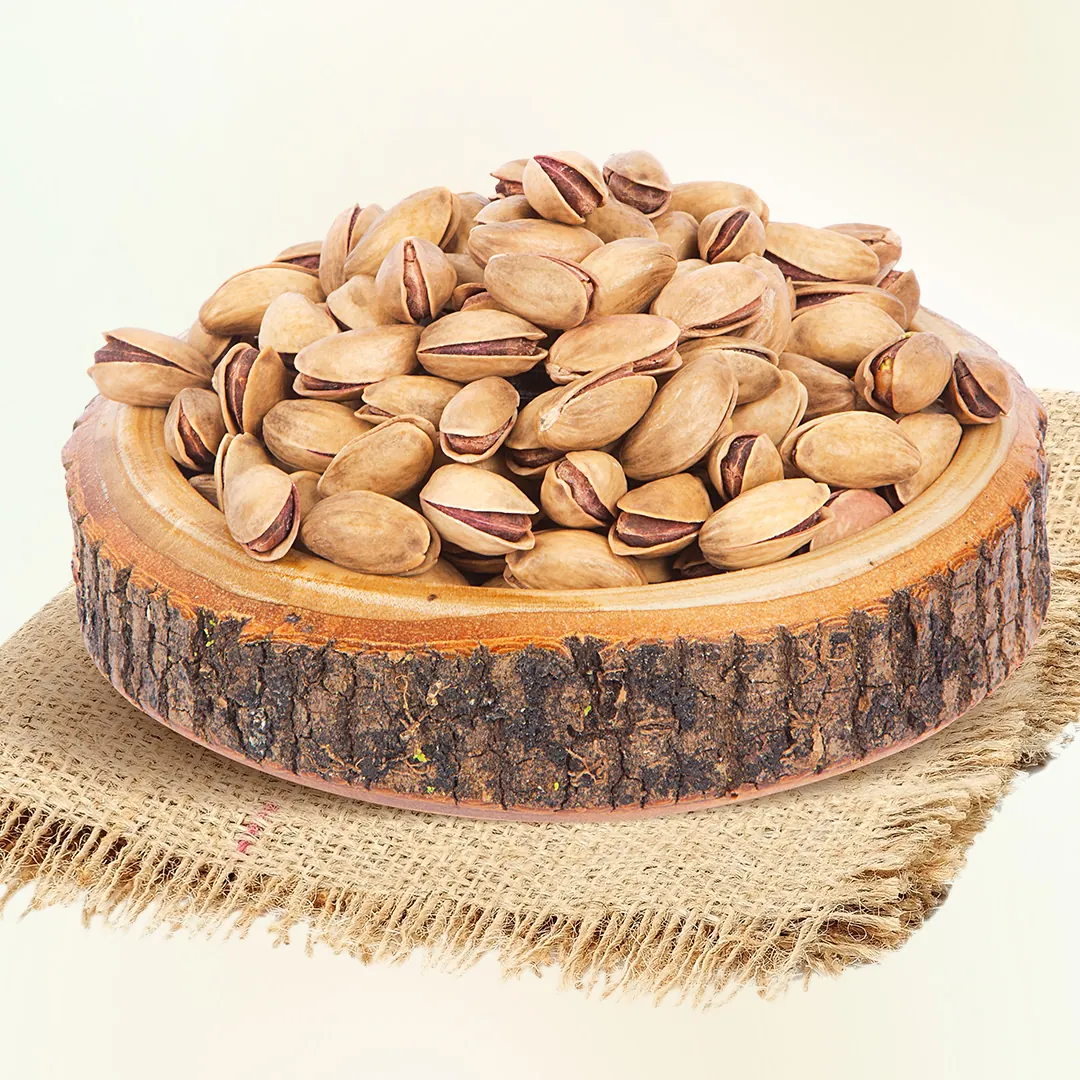
Dried pistachios are first separated into naturally split (open) and closed nuts. Split nuts are typically used for roasted in-shell snacks, while closed nuts are cracked and turned into kernels. Green boz pistachios, on the other hand, are processed directly into kernels to protect their colour.
After cracking, the kernels are separated from shell fragments and go through careful sorting:
- Removal of shell fragments and foreign matter
- Removal of stained, shrivelled, insect-damaged and discoloured kernels
- Separation of whole and broken kernels
- Final selection for colour uniformity
Optical sorting machines and experienced staff working by hand are used together at this stage.
4. Grading, analysis and packing
Size grading classifies pistachios by size using sieves or machines. For in-shell pistachios nut size, and for kernels size and integrity, determine the quality grade and the best application. Broken kernels can become the raw material for slivered, powdered or sliced products.
Before packing, samples are taken from each lot to check quality and food safety parameters such as moisture, appearance and aflatoxin. Approved product is filled into 10 kg carton boxes, 20 kg vacuum-packed cartons or 25 kg PP woven sacks according to the order, then labelled and recorded with a lot number. This way, every pack can be traced back to its lot.
Where red kernels fit in the journey
Red pistachio kernels, obtained from nuts harvested fully ripe in September, are known for their thin reddish-purple skin and mature aroma. Thanks to their excellent roasting performance, they are a core raw material for snack, chocolate, confectionery and bakery manufacturers. Processing them with the same care from harvest to packing ensures consistent flavour after roasting as well.
Sourcing from Niyaz Food
With four generations of expertise, Niyaz Food sources Antep pistachios from trusted producers in Gaziantep and processes them through to shipment under ISO 22000:2018 and ISO 9001:2015 certified systems. Explore our red pistachio kernels, see our quality certificates, and request a bulk quote on our wholesale pistachios page.